Planner 2026: The Continuum Edition and the Done List Method
Planner 2026 didn’t start as “another planner” for me to launch. It started because every January, I watched the same thing happen — beautifully designed planners promising a fresh start, and people ending up more overwhelmed by February than when they started.
I know that feeling well. I lived in it, for years, before I found a different way to plan.
Why I Stopped Believing in To-Do Lists
For years I organized my life with traditional to-do lists. Every day looked the same: a long list of things I needed to do, a constant feeling of being behind, and the quiet guilt of whatever didn’t get crossed off. Even on good days, the list always had more left on it than I’d finished.
Eventually I realized something uncomfortable: the problem was never my discipline. It was the method. To-do lists are future-facing — they constantly point at what’s missing. And when your mind is already under pressure, that doesn’t motivate you. It exhausts you.
The Shift: Writing in the Past Tense
The idea behind the Done List Method came from a simple change. Instead of writing “finish the work project,” I wrote “finished the work project” — before I’d actually done it. It felt strange at first, almost wrong. But something shifted. I felt calmer, more focused, more capable of actually starting.
This idea lines up with a well-documented pattern in psychology called the Zeigarnik Effect: unfinished tasks tend to stay on the mind and resurface far more than tasks already marked complete. Writing tasks in the past tense, as if they’re already done, changes how the day feels to approach. It creates momentum instead of resistance.
What Makes This Planner 2026 Edition Different
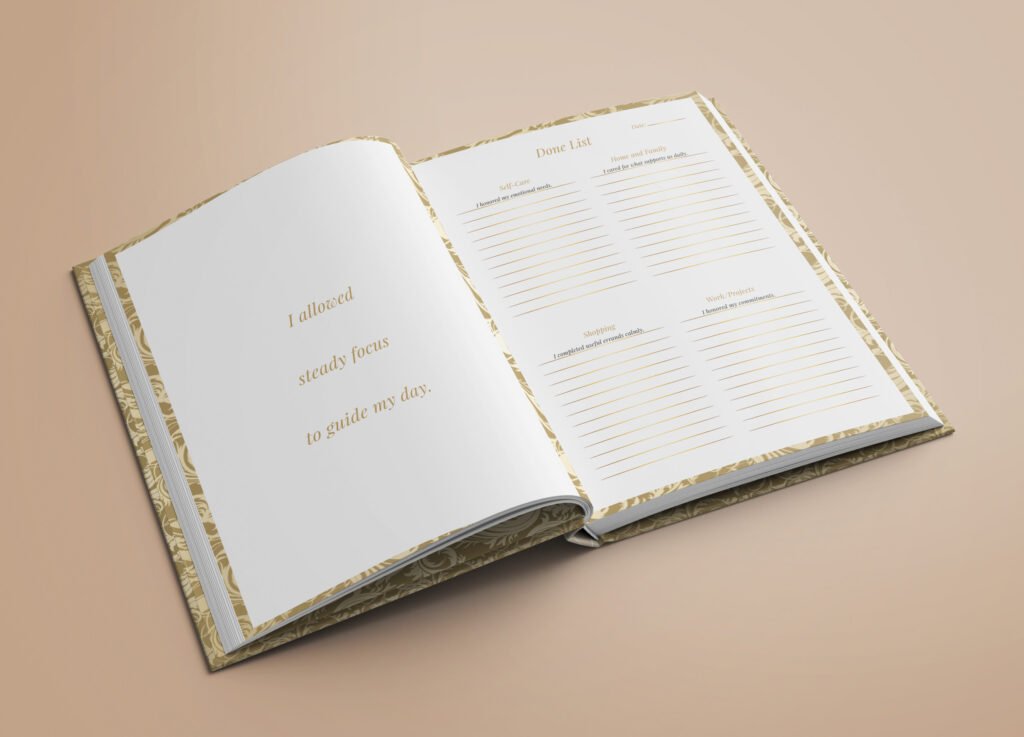
The Continuum Edition of this Planner 2026 is part of the Signature Collection, a guided 90-day Done List planner built for steady progress without pressure, rigidity, or burnout. Every day opens with a past-tense affirmation, and each page is organized into four sections that reflect real life — Self Care, Family, Work, and Shopping & Daily Life — not just one long, undifferentiated list.
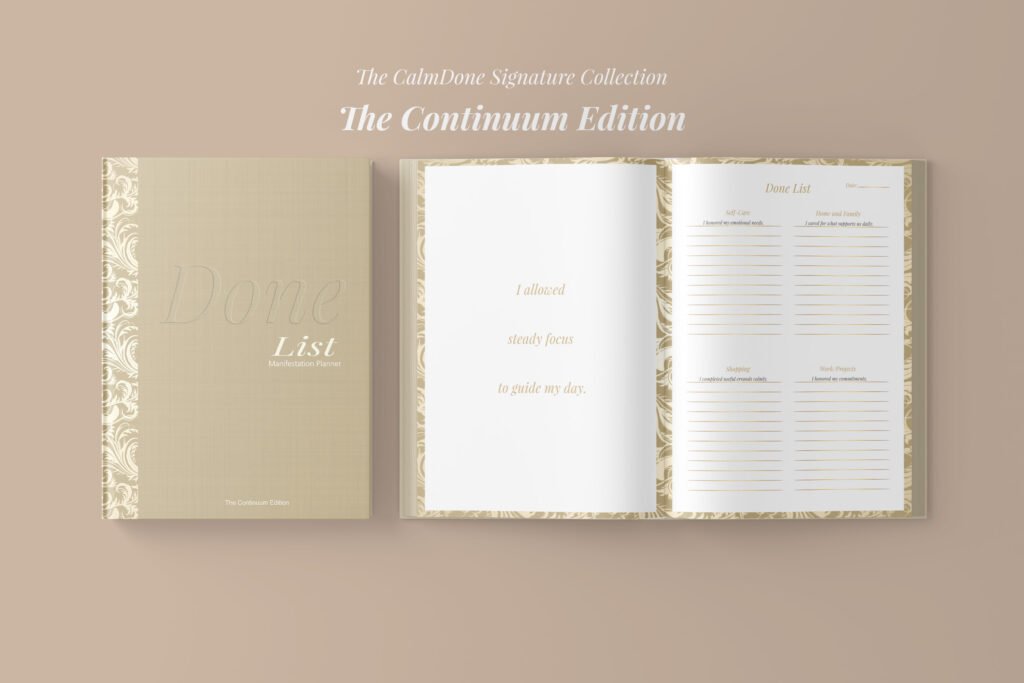
I called this Planner 2026 edition “Continuum” because I don’t believe planning should be about starting over. A lot of planners sell the idea that a new year means becoming a new version of yourself — that January 1st is a reset button. I don’t plan that way anymore, and I didn’t want this planner to ask that of anyone either. Life doesn’t restart at the new year. It continues. You’re not behind. You’re in motion, and this Planner 2026 is built to reflect that instead of fighting it.
What’s on Each Page
Every page of this Planner 2026 follows the same principle: space to write completed actions, sections that reflect real areas of life, and a past-tense affirmation instead of a motivational slogan aimed at pushing you harder. Always past tense — because your mind responds differently to “I did what mattered today” than it does to “I need to do more.” This planner doesn’t move you forward through pressure. It moves you forward through recognition.
Who This Planner 2026 Is For
The Continuum Edition is for you if traditional planners make you anxious, if you’re tired of chasing productivity for its own sake, if you want structure without rigidity, and if you value reflection as much as action. It’s not built for aggressive goal-tracking, rigid hour-by-hour schedules, or hustle culture — and that’s intentional.
Write It as Done
You don’t need to do more this year. You need a way to actually see what you’re already doing. Sometimes the most useful shift in planning isn’t a new system at all. It’s changing the tense.
This Planner 2026, the Continuum Edition, is available now as part of the Signature Collection.