
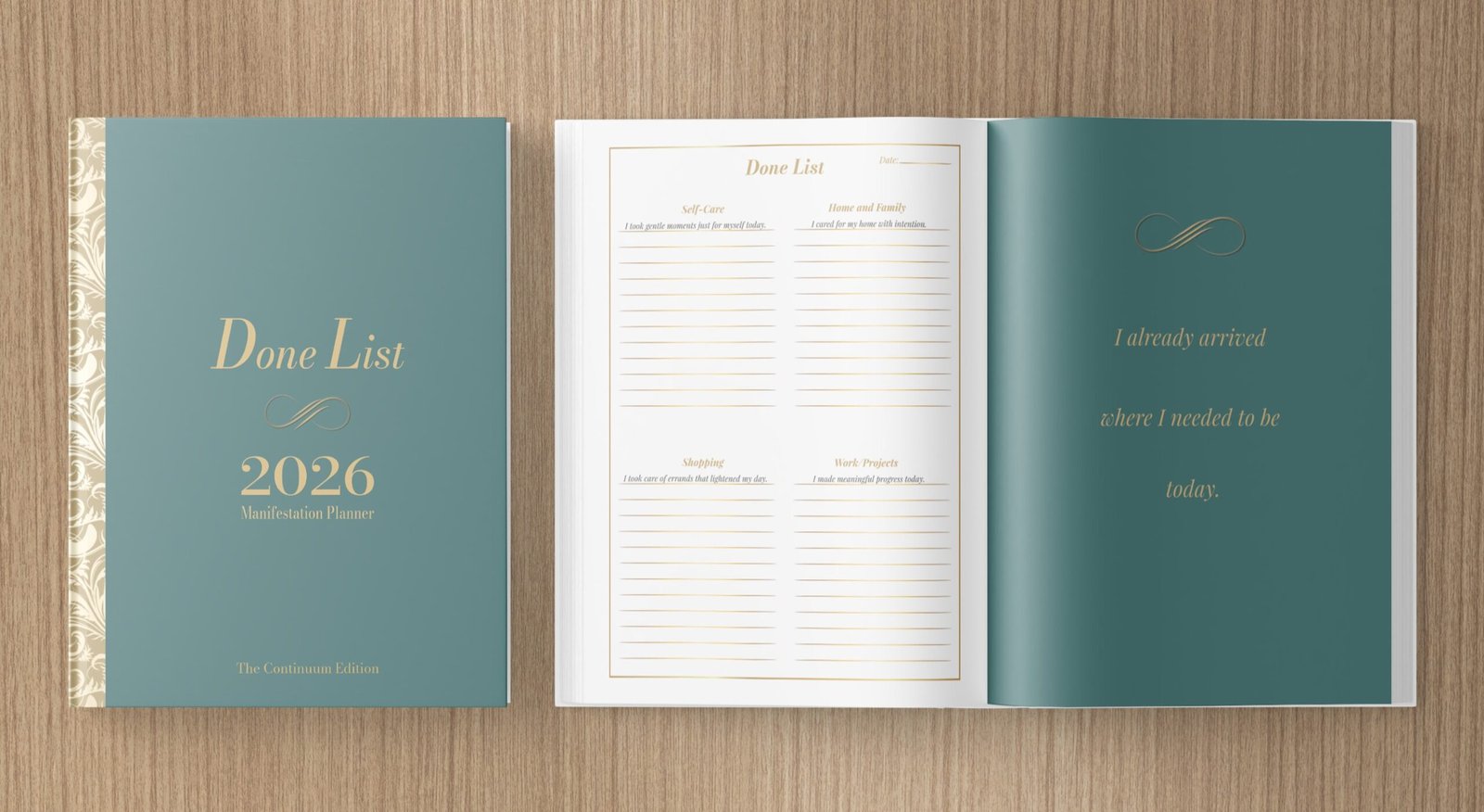
I didn’t start creating a planner 2026 because I wanted to make “another planner.”
I started because every year, I saw the same thing. Beautifully designed 2026 planner notebooks promised productivity, motivation, and a fresh start. Yet, these planners somehow left people feeling even more overwhelmed.
I know that feeling well.
I lived in it.
And this post isn’t about a product launch.
A different way of planning slowly turned into the Done List™ – The Continuum Edition. This explains why this planner looks the way it does.
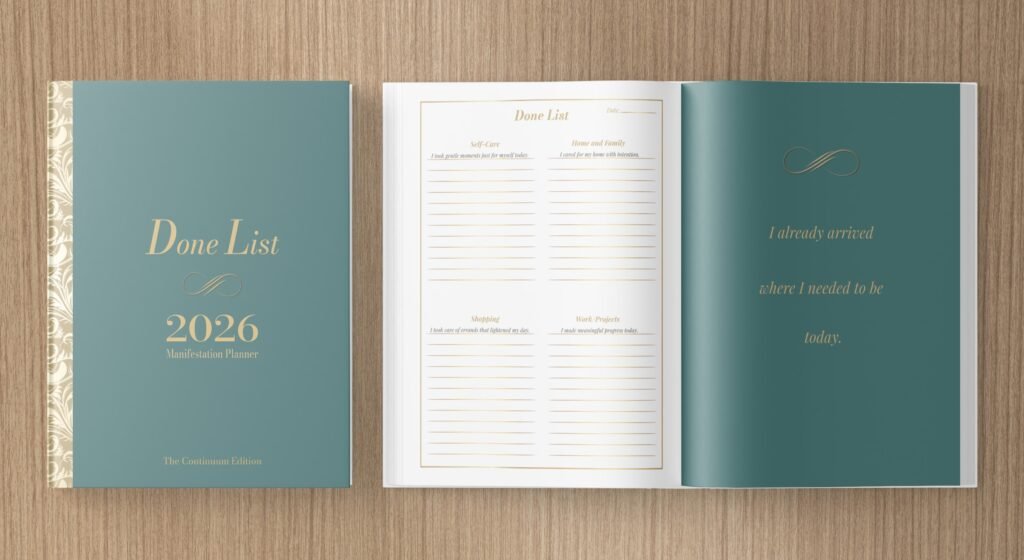
Why I Stopped Believing in To-Do Lists
For years, I tried to organize my life using traditional to-do lists.
Every day started the same:
- a long list of things I needed to do
- a constant feeling of being behind
- the quiet guilt of unfinished tasks
Even on good days, the list always had more left on it.
That’s when I realized something uncomfortable but important:
The problem wasn’t my discipline.
The problem was the method.
To-do lists are future-oriented.
They constantly point to what’s missing.
And when your brain is under pressure — that doesn’t motivate.
It exhausts.
The Shift That Changed Everything: Writing in the Past Tense
The idea for the Done List™ came from a simple experiment.
Instead of writing:
“Finish work project”
I wrote:
“Finished the work project.”
Even before I started.
It felt strange at first — almost wrong.
But something unexpected happened.
I felt calmer.
More focused.
More capable.
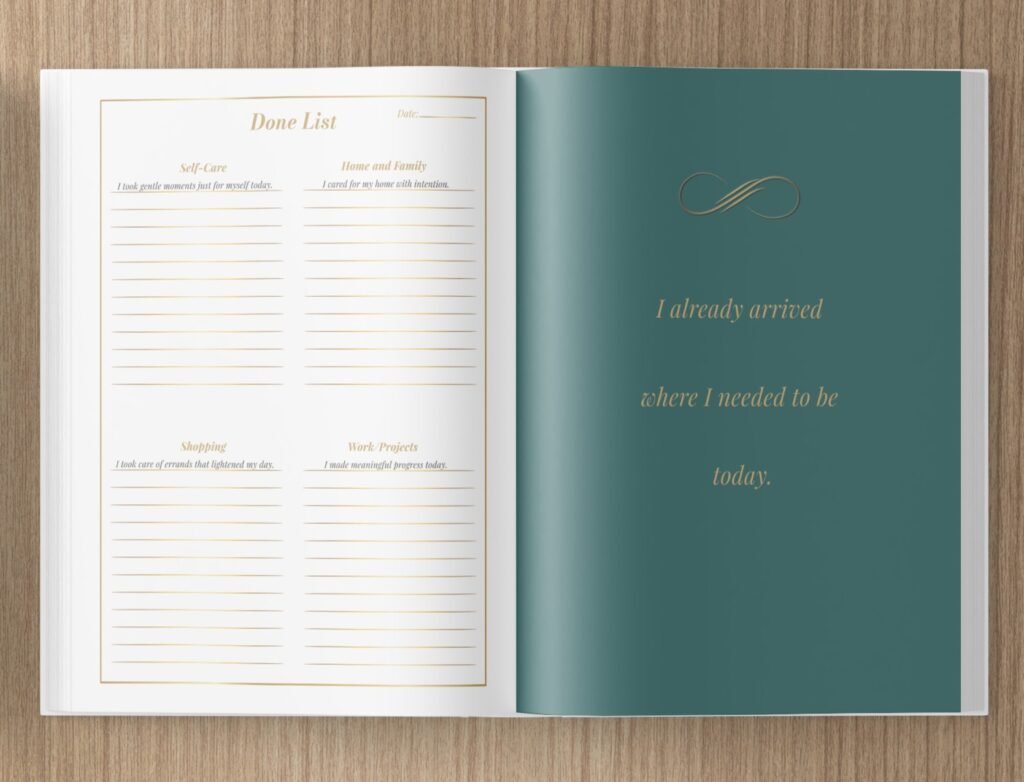
Writing tasks in the past tense, as if they were already done, changed how my brain approached the day.
It created momentum instead of resistance.
This became the foundation of the Done List™ method:
- write tasks as already completed
- focus on progress, not pressure
- acknowledge what is, instead of what’s missing
And once I knew this worked, I couldn’t unsee it.
Why a New Planner 2026 Edition Was Necessary
When I started working on the planner 2026, I wasn’t interested in trends.
I wasn’t chasing:
- viral aesthetics
- loud colors
- motivational clichés
I wanted to create a 2026 planner notebook that feels calm the moment you open it.
A planner that:
- doesn’t shout productivity
- doesn’t guilt you into doing more
- doesn’t pretend every day needs to be optimized
The method stayed the same.
But the expression needed to evolve.
The Long Road to This Cover (And Why It Took So Many Versions)
I won’t pretend this cover appeared fully formed.
It didn’t.
I went through more versions than I expected:
- soft neutrals
- minimal beige
- decorative layouts
- stripped-down designs
Some felt too quiet.
Some felt too busy.
Some looked nice — but didn’t feel honest.
I kept asking myself one question:
Would I want to keep this on my desk every day?
Not for Instagram.
Not for sales.
For real life.
That’s when I slowed down and stopped forcing decisions.
Finding the Right Visual Language
The final direction came from clarity, not inspiration.
I wanted this planner 2026 to communicate:
- continuity
- calm authority
- grounded confidence
That’s how the deep teal color emerged.
It’s not trendy for the sake of being trendy.
It’s stable.
Quiet.
Enduring.
The infinity symbol followed naturally — not as decoration, but as meaning:
progress isn’t linear, and planning shouldn’t be either.
During this phase, I explored visual references, textures, and layout ideas. I used external design resources like Freepik. These tools helped me test patterns and proportions before refining everything into a cohesive and intentional design.
It wasn’t about copying inspiration.
It was about understanding balance.
Why This Is Called The Continuum Edition
I didn’t want this to feel like a reset.
Many planners sell the idea that every year you have to start over. You must become a new version of yourself.
I don’t believe in that anymore.
This edition is called The Continuum Edition because life doesn’t restart on January 1st.
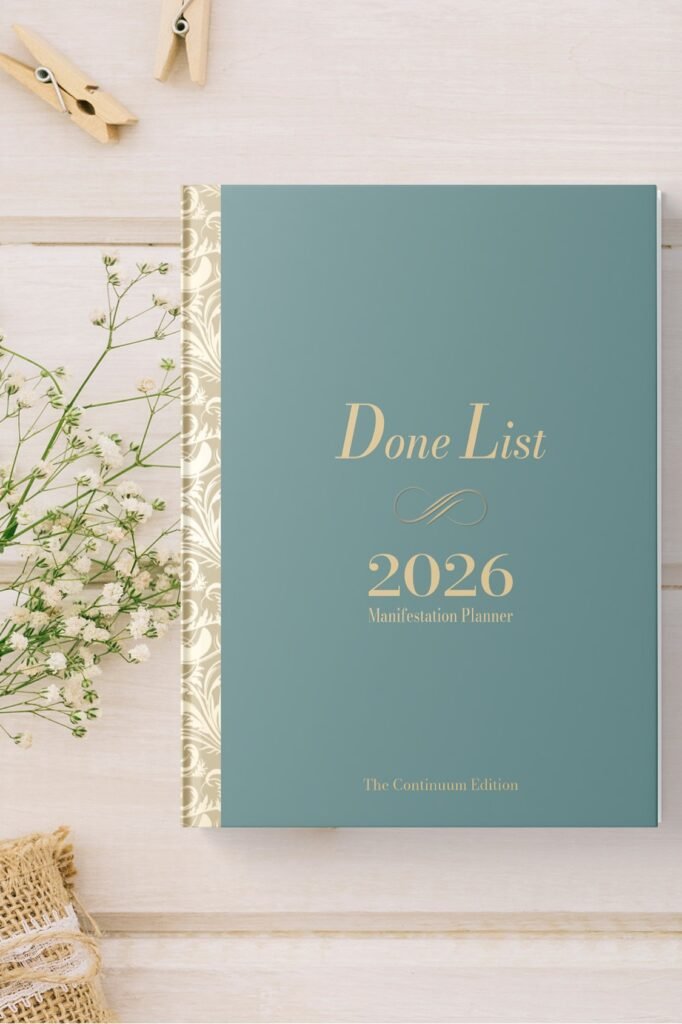
It continues.
This 2026 planner notebook is not about reinvention.
It’s about acknowledgment.
You’re not behind.
You’re in motion.
Inside the Planner: One Page, One Day, One Message
Every page inside this planner 2026 follows the same principle.
Each day includes:
- space to write completed actions
- categories that reflect real life (work, self-care, home, personal progress)
- a motivational quote written in the past tense
Always in the past tense.
Why?
Because your brain responds differently to:
“I did what mattered today.”
than to:
“I need to do more.”
This planner doesn’t push you forward by pressure.
It moves you forward by recognition, just like my other planners – check here Collection
Who This Planner Is (And Isn’t) For
This planner 2026 notebook is for you if:
- traditional planners make you anxious
- you’re tired of chasing productivity
- you want structure without pressure
- you value reflection as much as action
It’s not for:
- aggressive goal-tracking
- rigid schedules
- hustle culture
And that’s intentional.
Why I’m Sharing This Story Before the Amazon Launch
This planner will be available on Amazon soon.
But before it’s a product, it’s a process.
I wanted to share:
- why it looks the way it does
- why the method matters
- why this edition exists
Because if you’ve been searching for a planner 2026 that feels different — now you know why this one is.
Subscribe for Early Access to the 2026 Planner Notebook
The Done List™ – The Continuum Edition will launch on Amazon shortly.
If you want to:
- get notified when it becomes available
- receive early updates
- follow future editions and refinements
👉 Subscribe below to join the mailing list.
Follow on Pinterest and Facebook
No pressure.
No noise.
Just a calmer way to plan 2026.
Belive me
You don’t need to do more next year.
You need to see what you’re already doing.
And sometimes, the most powerful shift in planning…
is changing the tense.